

- Use case 1: a rule
- Use case 2: a method
Say a rule once
1
Session 1: state the rule
The developer says: “All API errors must return
{ code, message }.” The agent builds the first endpoint and saves the rule as a memory.2
Session 2: it just knows
In a brand new session, the agent adds a second endpoint. Its errors already use
{ code, message }. Nobody repeated the rule.3
Session 3: the rule changes
The team moves to a standard error format. The developer says so once. The old rule is retired, and new endpoints use the new format.
You say it once, and your agent keeps it until you change it.
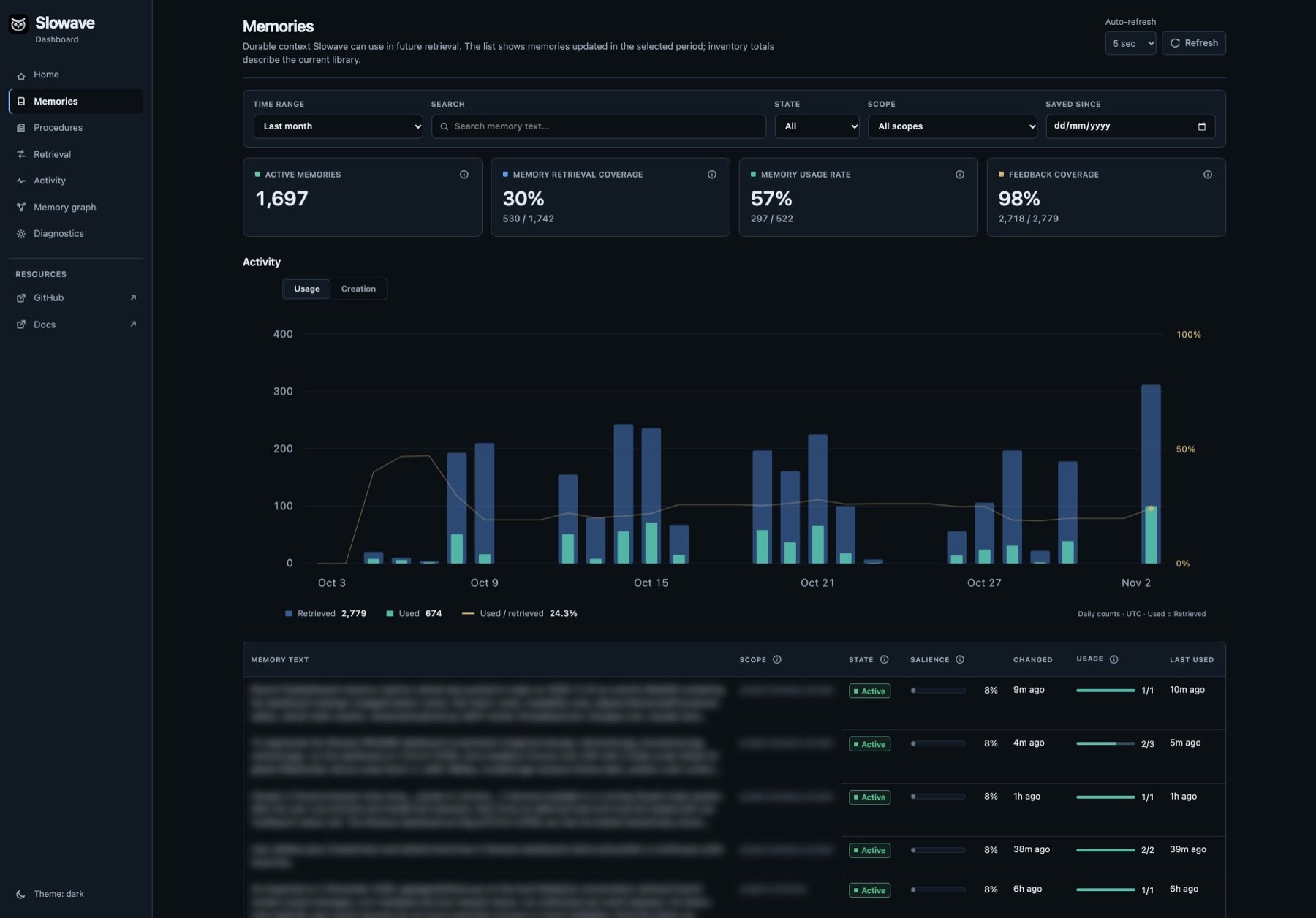
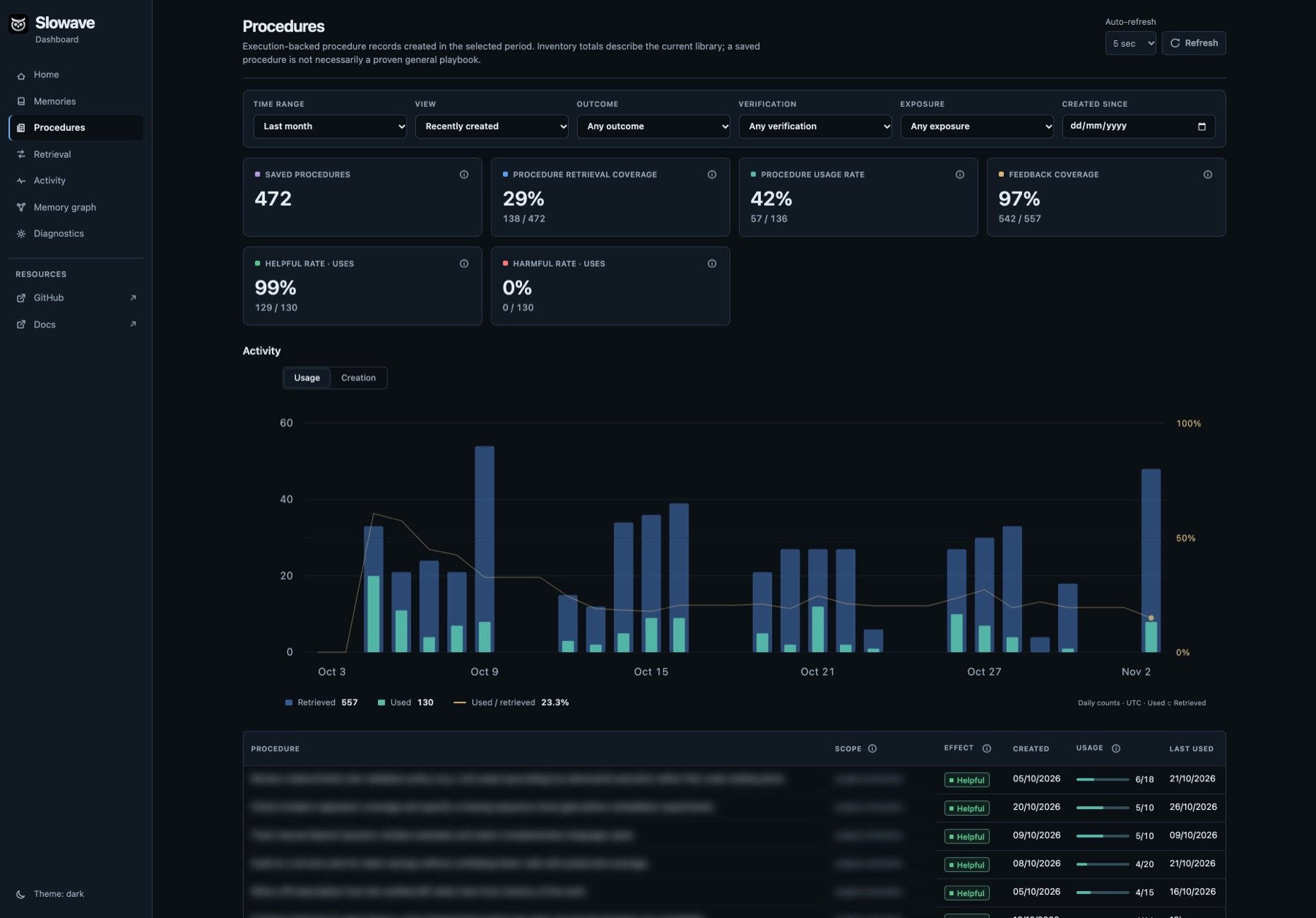
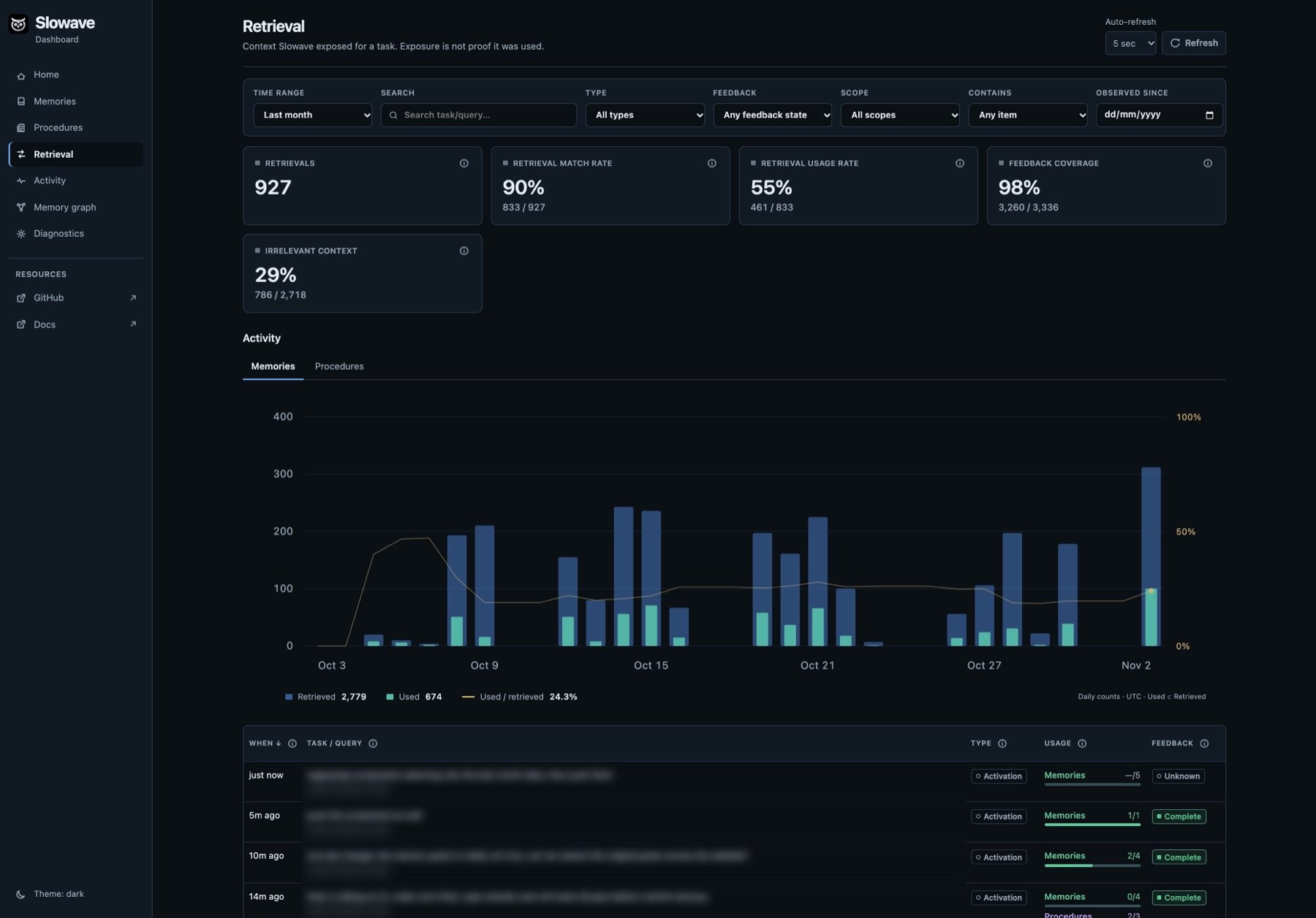
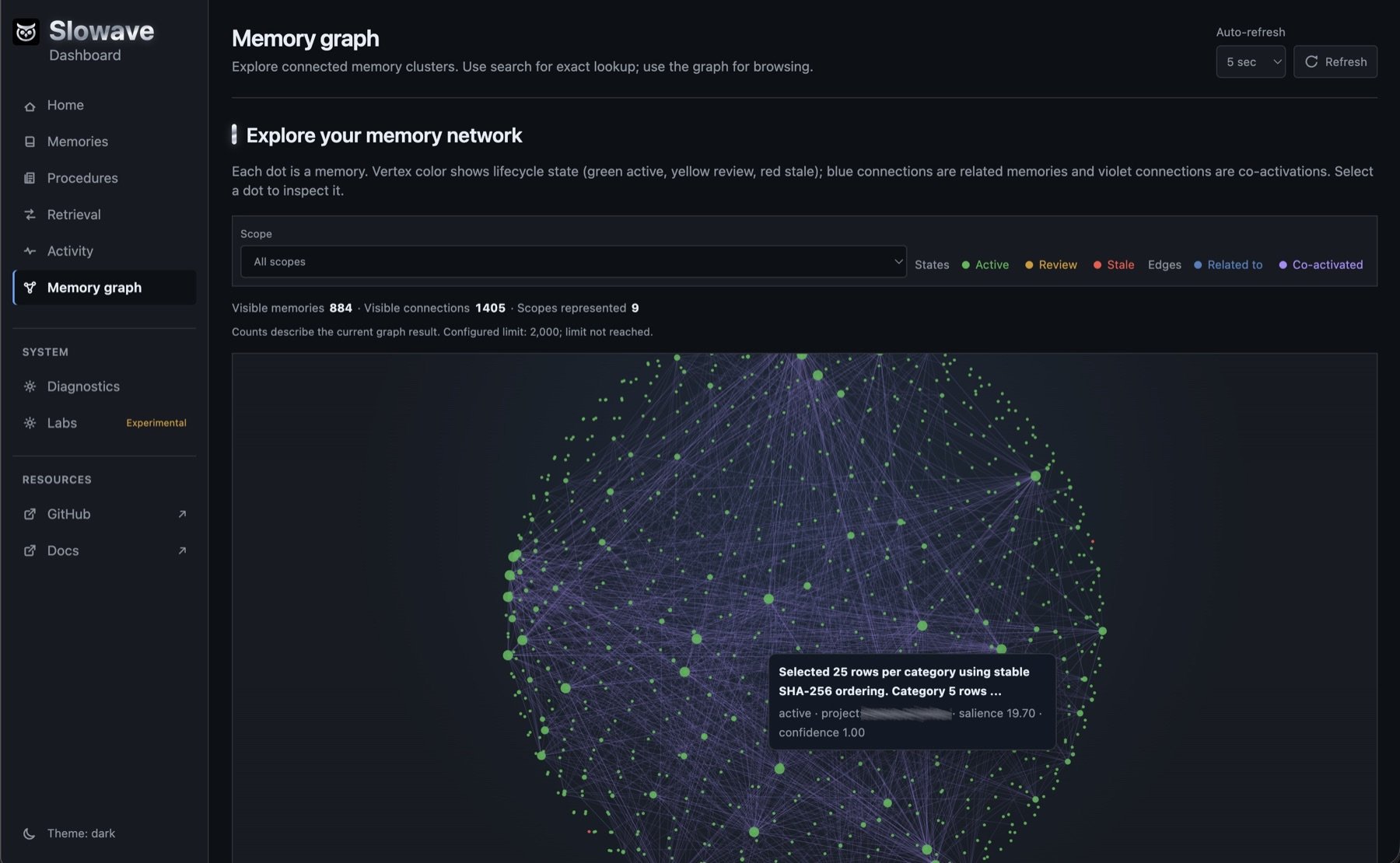
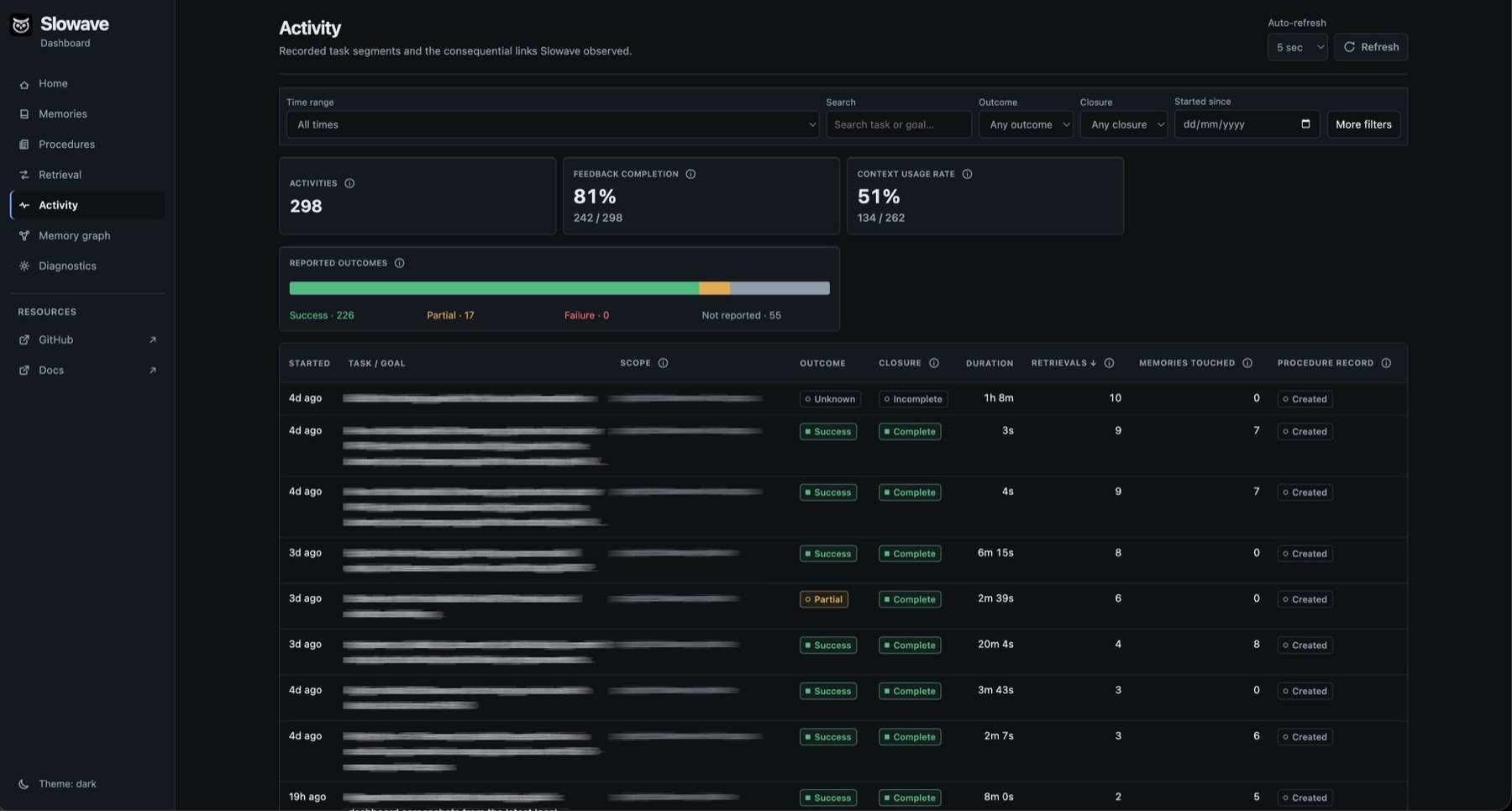
Look inside with the dashboard
Runslowave dashboard to open it. Everything shown stays on your computer.
- Overview
- Memories
- Procedures
- Retrieval
- Graph
- Activity
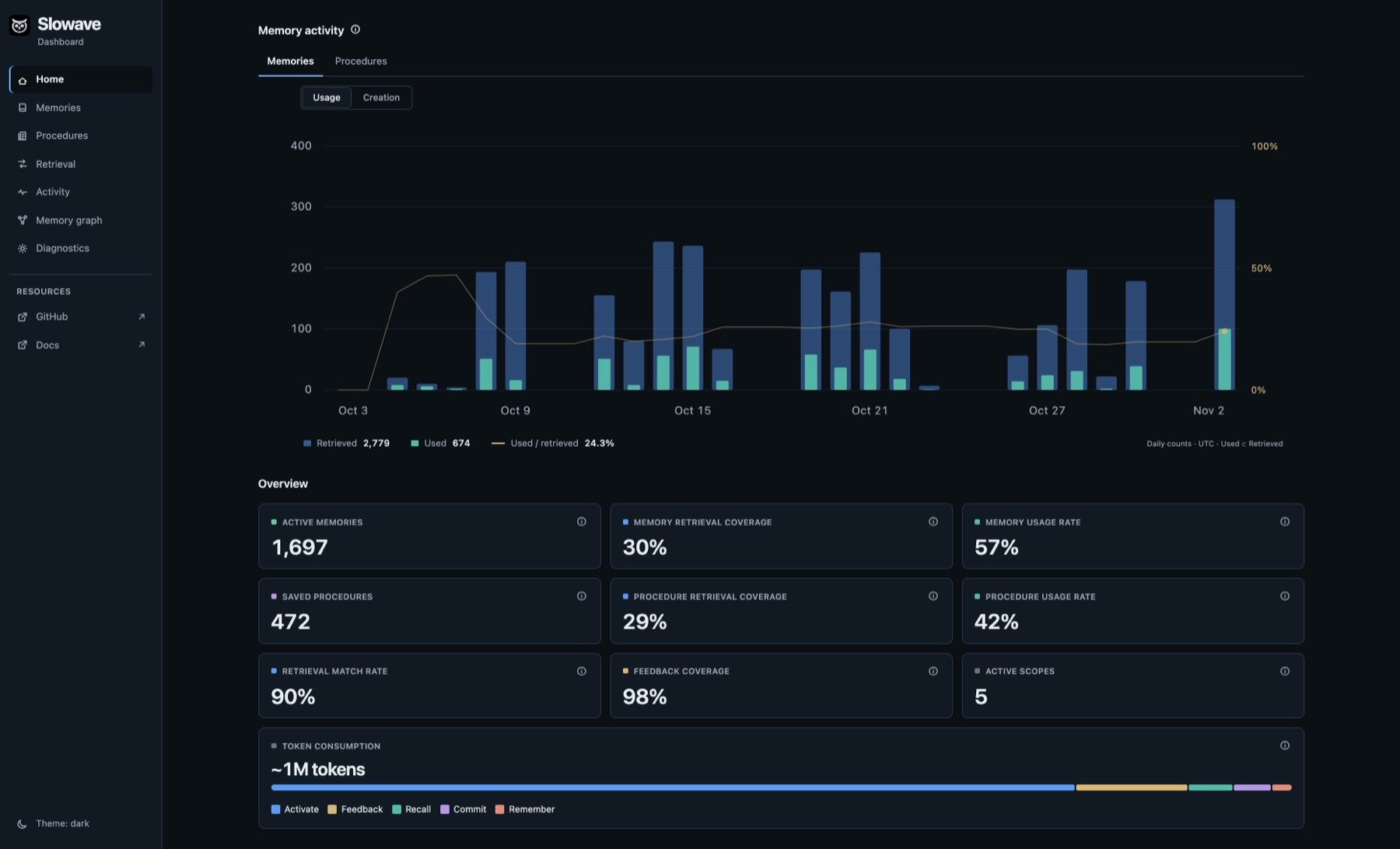
How much your agent recalled, and how useful it was.
Next: connect your agent
Pick your tool and finish setup.